
Choosing the right forklift is a critical decision for businesses in construction, logistics, warehousing, and industrial operations. Among all options, diesel forklifts and electric forklifts are the two most commonly compared types.
Each has its own advantages, limitations, and ideal applications. In this guide, we will compare diesel forklift vs electric forklift in terms of performance, cost, maintenance, and usage scenarios—helping you choose the best solution for your business.
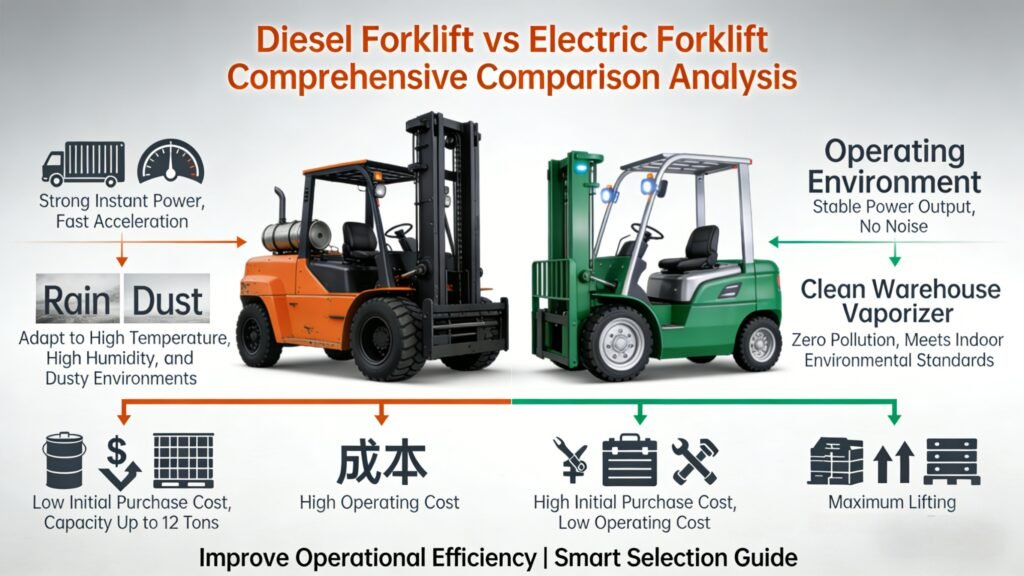
1. Power and Performance
Diesel Forklift
Diesel forklifts are known for their strong power output and high torque, making them ideal for heavy-duty operations.
Advantages:
- High lifting capacity (3–10 tons or more)
- Excellent performance on uneven or rough terrain
- Stable operation for outdoor and construction sites
Best for:
- Construction projects
- Ports and container yards
- Outdoor material handling
Electric Forklift
Electric forklifts are powered by batteries and offer smooth and quiet operation.
Advantages:
- Consistent performance for light to medium loads
- Ideal for indoor environments
- Zero exhaust emissions
Best for:
- Warehouses
- Factories
- Cold storage and indoor logistics
2. Operating Environment
| Factor | Diesel Forklift | Electric Forklift |
|---|---|---|
| Indoor use | ❌ Not recommended | ✅ Ideal |
| Outdoor use | ✅ Excellent | ⚠️ Limited |
| Noise level | High | Very low |
| Emissions | Yes | None |
Key takeaway:
If your operation is mainly outdoor, diesel forklifts are the better choice. For indoor or enclosed spaces, electric forklifts are safer and more compliant with environmental regulations.
3. Fuel, Energy, and Operating Cost
Diesel Forklift Cost Factors
- Lower initial purchase price
- Higher fuel consumption
- Ongoing diesel fuel expenses
Electric Forklift Cost Factors
- Higher initial investment
- Lower daily operating cost
- Battery replacement cost every few years
Long-term view:
Electric forklifts generally have lower operating costs, while diesel forklifts are more cost-effective for heavy-duty and irregular usage.
4. Maintenance Requirements
Diesel Forklift Maintenance
- Engine oil changes
- Fuel filter replacement
- More mechanical components
Electric Forklift Maintenance
- Fewer moving parts
- Battery maintenance and charging management
- Lower maintenance frequency
👉 Electric forklifts require less routine maintenance, which can reduce downtime in warehouse operations.
5. Lifting Capacity and Application Range
- Diesel forklifts typically handle heavier loads and longer working hours.
- Electric forklifts are suitable for light to medium lifting with predictable shifts.
If your business involves continuous heavy lifting, diesel forklifts remain the preferred solution.
6. Environmental and Safety Considerations
With increasing environmental regulations worldwide:
- Electric forklifts are compliant with green and emission-free policies
- Diesel forklifts may face restrictions in certain regions or indoor operations
For companies aiming at sustainable operations, electric forklifts are a future-proof investment.
7. Which Forklift Should You Choose?
Choose a diesel forklift if:
- You work mainly outdoors
- You need high lifting capacity
- You operate on rough or uneven ground
Choose an electric forklift if:
- You work indoors
- Noise and emissions matter
- You want lower long-term operating costs
Conclusion
There is no single “best” forklift—only the best forklift for your application. By understanding the differences between diesel and electric forklifts, you can make a smarter investment that improves efficiency and reduces operating costs.
If you are unsure which forklift fits your needs, professional guidance can help you avoid costly mistakes.
Call to Action
Looking for reliable forklifts for construction or industrial use?
ArcherMach supplies high-quality diesel and electric forklifts tailored for different working conditions.👉 Contact us today to get expert recommendations and competitive pricing.